


These Mistakes Worsen Bad Breath Instead of Eliminating It
Do Not Do Them!
Mistake #1
Using Toothpaste or Mouthwash with Drying Agents
Check oral care products carefully; if they contain Alcohol or Sodium Lauryl Sulfate (SLS), avoid them.
Many toothpastes and mouthwashes contain sodium lauryl sulfate (SLS) or alcohol—two ingredients known to cause dryness in the mouth. SLS is a foaming agent commonly added to oral care products, while alcohol is used as a preservative and antiseptic. Both can interfere with saliva flow and create an environment where odor-causing bacteria thrive.
Since saliva is essential for neutralizing acids and rinsing away food particles and bacteria, reduced saliva flow directly increases the risk of bad breath. Choosing alcohol-free and SLS-free oral care products helps maintain moisture in the mouth, strengthening its natural defenses and supporting fresher breath.
To further improve tongue cleaning, Zinamix Tongue Cleaning Powder is formulated to dissolve and soften the tongue coating before removal. By breaking down this hardened layer, it prepares the tongue for gentle yet thorough cleaning, ensuring odor-causing bacteria are eliminated without damaging the tongue’s delicate surface.

Mistake #2
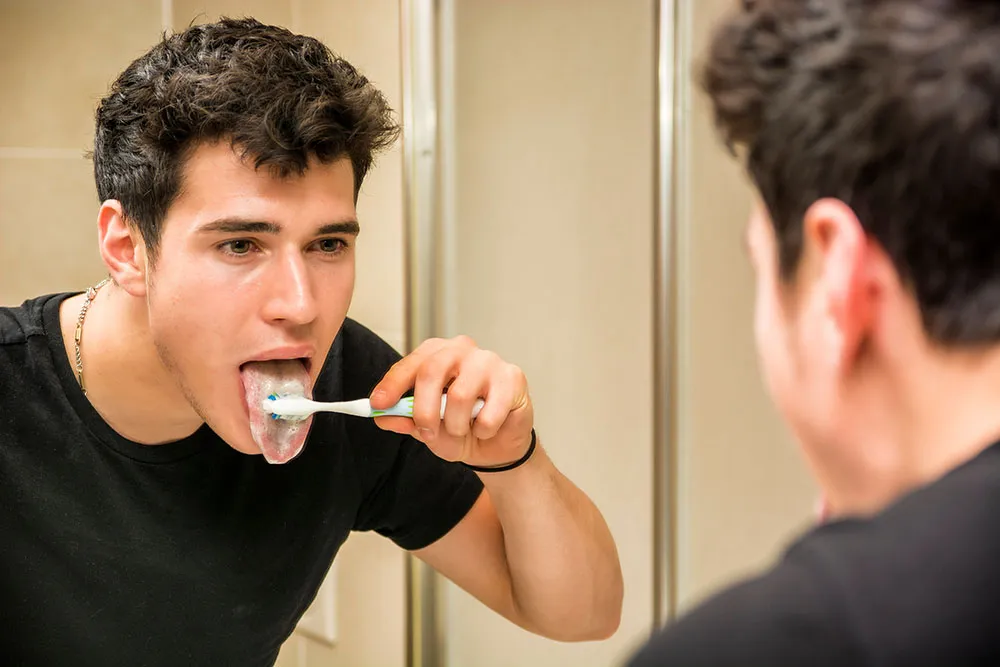
Using Toothbrush and Toothpaste to Clean the Tongue
Avoid using toothpaste or a toothbrush to clean your tongue, as this can push bacteria deeper and harden the tongue coating
Many people believe that brushing the tongue with toothpaste and a toothbrush removes bacteria and freshens breath. In reality, toothpaste is designed for the hard, solid surfaces of teeth—not for the delicate tissue of the tongue.
Toothpaste can be erosive to the tongue’s sensitive surface, and using a toothbrush for this purpose may inadvertently push toothpaste particles into the deep grooves of the tongue, where bacteria hide. Instead of cleaning, this action can worsen the problem.
Over time, the tongue coating becomes thicker and more condensed, creating a protective layer that enables bacteria to thrive. Once this coating solidifies, it shields odor-causing bacteria from standard oral hygiene measures, making bad breath more persistent.
Mistake #3
Scraping the Tongue Without First Dissolving the Coating
Direct Tongue craping Without First Dissolving the Coating first, Pushes the coat Deeper and Protects Bacteria
Another common mistake is using a tongue scraper on a hardened tongue coating without first softening it. Thick, hard coatings make it difficult for scrapers to remove all the bacteria effectively.
When the coating is tough, scrapers often remove only the top layer, pushing the remaining coating deeper into the tongue’s crevices. This makes it harder to reach the bacteria at the root of the problem.
Applying excessive pressure or using a sharp scraper can also irritate the taste buds. This ineffective scraping often leads people to press harder or use more abrasive tools, which further damages the tongue without addressing the underlying issue.

Mistake #4
Using Large or Oversized Tools for Tongue Cleaning
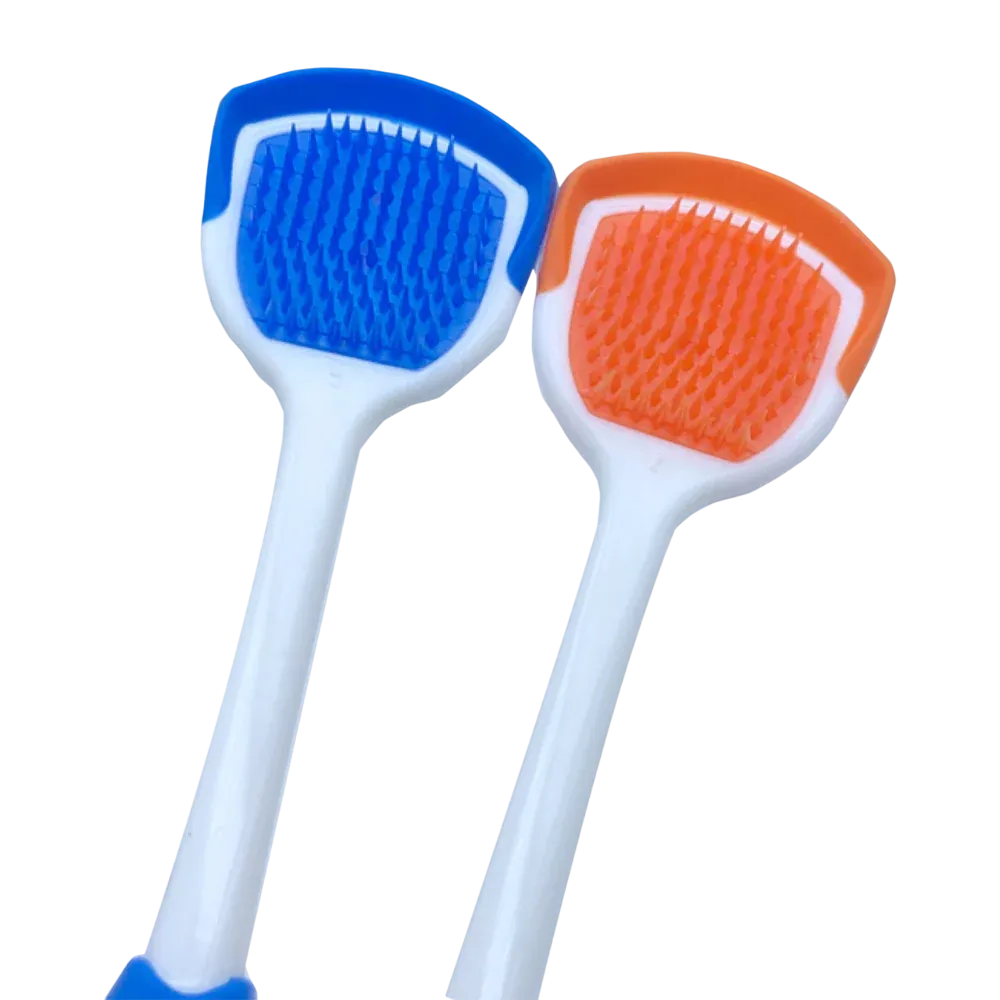
Avoid using large-headed toothbrushes or tongue brushes—they can trigger your gag reflex and make cleaning the back of the tongue difficult, Use a small-headed brush
Using a large-headed toothbrush or tongue brush to clean the tongue is a common mistake that can reduce the effectiveness of tongue cleaning. Large tools may trigger a gag reflex, making the process uncomfortable or unpleasant.
This discomfort often discourages people from thoroughly cleaning the back of the tongue, where odor-causing bacteria tend to accumulate. As a result, bacteria remain in hard-to-reach areas, contributing to persistent bad breath.
In contrast, the Zinamix Tongue Brush features a small head designed to minimize the chance of triggering nausea. This allows users to comfortably clean the entire tongue, including the farthest back areas, without discomfort, ensuring a more thorough removal of odor-causing bacteria.
Mistake #5
Using Commercial Tongue Gels That Don’t Dissolve the Coating
Avoid Commercial Tongue Gels or Pastes Claiming to clean the tongue That Don’t Dissolve the Coating
Many people assume these products will clean the tongue effectively, but in reality, they often fail to address the hardened layer on the tongue.
Instead of removing the coating, these gels can add another layer of thickness, pushing the existing coating deeper into the tongue’s crevices. This traps bacteria even further and makes it harder to clean the tongue thoroughly.
Over time, this ineffective approach worsens the condition of the tongue, intensifying bad breath and creating a false sense of cleanliness. For proper tongue hygiene, it’s important to use products specifically designed to dissolve the coating first, allowing gentle and complete removal of odor-causing bacteria.
